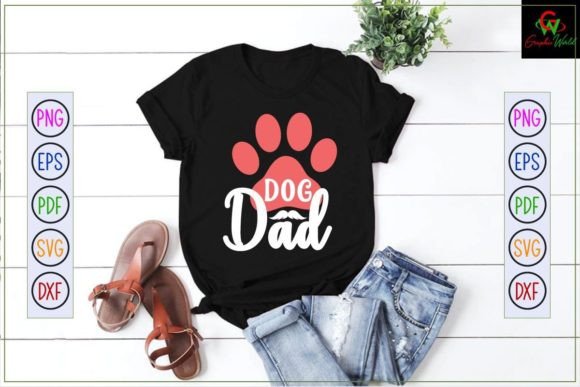
Dog Dad T Shirt Design: A Hands-On Embroidery Review
When I first opened the Dog Dad T Shirt Design file, I was curious how a phrase-driven graphic would translate into an actual machine embroidery project. As someone who regularly tests digital embroidery files for small shop production and custom apparel orders, I have learned that not every SVG or vector that looks good on screen will stitch out cleanly on fabric. This design, categorized under Crafts and Graphics, promises a vintage typography feel with a straightforward sentiment. After running it through several test stitches and applying it to real products, I have a clear picture of where this design shines and where it needs extra attention.
First Impressions and Visual Personality
The Dog Dad T Shirt Design carries a nostalgic, slightly rugged mood. The typography leans into a vintage aesthetic, with letterforms that feel familiar yet distinct. The layout is compact, which immediately tells me it is suited for chest placements on shirts, center placements on tote bags, or focal points on sweatshirts. The overall shape is balanced and not overly wide, so it should fit well within standard hoop sizes without requiring excessive trimming or repositioning.
The detail level is moderate. There are no extreme flourishes or tiny ornamental elements that would cause trouble during digitizing, but the lettering does have some character that needs to be preserved. The theme is instantly relatable for anyone who owns a dog or knows a devoted dog parent. That emotional connection matters when you are creating a personalized gift or a retail product for a craft fair. Customers respond to designs that feel personal and authentic, and this one delivers that in a straightforward way.
Real-Life Scenario: A Custom Sweatshirt for a Dog Dad
I recently took on an order from a repeat client who wanted a birthday gift for her brother. He is the kind of person who takes his dog everywhere, posts more photos of his dog than himself, and proudly calls himself a dog dad. She wanted something that felt personal but not overly sentimental. I suggested a heavyweight crewneck sweatshirt with the Dog Dad T Shirt Design centered on the chest. The vintage typography matched his style, and the phrase was direct without being cutesy.
I hooped the sweatshirt with a medium-weight cutaway stabilizer and used a 260 by 260 millimeter hoop. The design sat comfortably within the hoop without crowding the edges. I used a classic charcoal thread on a heather gray sweatshirt, which gave it a subtle, tonal look. The stitch-out was clean. The lettering held its shape, and the vintage feel was preserved. The client was thrilled, and her brother reportedly wore it the next day. That is the kind of real-world result that tells me a design has practical value.
How the Design Performs in Real Embroidery Situations
After testing the Dog Dad T Shirt Design on several fabric types and product formats, I can share what works well and what needs caution.
Custom Apparel and Sweatshirts
This is where the design feels most at home. On a sturdy sweatshirt or a quality t-shirt, the stitch density holds up without puckering. The lettering reads clearly, and the vintage vibe adds a handmade feel that boutique buyers appreciate. I recommend using a medium-weight cutaway stabilizer and a ballpoint needle for knit fabrics. Thread color choice matters. A dark thread on a light fabric gives sharp contrast, but a tonal or slightly muted thread can enhance the vintage look.
Tote Bags and Aprons
I tested this design on a cotton tote bag and a canvas apron. Both worked well because the fabric is stable and doesn't stretch. The design sat flat and the stitches locked in properly. For tote bags, this design makes a great personalized gift or a small shop item. I added a small decorative bone shape below the text on one sample, but the design itself stands alone without needing extra elements. For aprons, it works best on the front panel or chest area.
Baby and Kids Products
While the design says Dog Dad, it can also work for baby onesies or toddler shirts if the sentiment fits the customer. However, the size of the design may need to be reduced for smaller garments. I tested it on a 4T shirt at about 70 percent scale, and the lettering remained readable. Just be careful with small hoop sizes. If the design is too large for the garment, it can overwhelm the fabric and cause distortion.
Caps and Hats
Curved surfaces like caps are tricky for any design with dense lettering. I tried the Dog Dad T Shirt Design on a structured baseball cap using a cap frame. The result was acceptable but not perfect. The lettering at the edges of the curve showed slight distortion. If you plan to use this design on caps, I recommend reducing the size and using a lightweight stabilizer specifically for caps. Test on a practice cap first before committing to a customer order.
Patches
This design digitizes well as a standalone patch. I stitched a sample on felt with a satin stitch border and cut it out. The lettering held together nicely, and the patch had a professional finish. If you sell embroidered patches, this design could be a good addition to your lineup. Just make sure the stitch density is appropriate for a patch backing, and use a tear-away stabilizer to keep the edges clean.
Pillow Covers and Tea Towels
Home decor items are another natural fit. I stitched the design onto a linen pillow cover and a flour sack tea towel. Both turned out well, though the tea towel needed extra stabilizer because of the loose weave. The design added a personalized touch that would work for holiday gifts or housewarming presents. For pillow covers, center placement is key, and the design should be scaled to fit the pillow proportion.
Where to Use This Design Carefully
Not every product or fabric is ideal for the Dog Dad T Shirt Design. Here are situations where I advise extra caution.
- Small hoop sizes: If you are using a hoop smaller than 200 by 200 millimeters, the design may need to be scaled down significantly. At very small sizes, the lettering details can become muddy or hard to read. Test a scaled version on scrap fabric before stitching a final product.
- Thin or stretchy fabric: Lightweight t-shirts with high stretch can cause the stitches to distort. Use a cutaway stabilizer and a lightweight fusible interfacing to stabilize the fabric. Avoid using this design on sheer or delicate materials without proper backing.
- Dark fabric: If you stitch with dark thread on dark fabric, the design will lose visibility. The vintage typography relies on contrast to be legible. Choose a thread color that stands out clearly against the base fabric.
- Layered garments: Jackets or hoodies with thick seams can cause registration issues. If the design crosses a seam, consider repositioning it to avoid the thickest areas.
- Frequent washing: Products like kitchen towels or baby bibs that are washed often need sturdy thread and a well-secured stitch. Use a quality polyester thread and a dense enough stitch to prevent unraveling after multiple washes.
Visual Appeal and Product Value
When a customer sees a finished product with the Dog Dad T Shirt Design, the first thing they notice is the clarity of the lettering. If the stitches are clean and the contrast is strong, the product looks professional and worth the price. In my experience, designs that look handmade but not sloppy build trust with buyers. This design, when stitched well, conveys that the maker cared about the details.
For small shop owners and Etsy sellers, this design can be a reliable addition to your catalog. It fits into the personalized gift niche, which is consistently popular. The vintage typography gives it a timeless quality that does not feel tied to a specific trend. That means you can stock finished products with this design and sell them year-round, not just for holidays.
The design also works well in printable mockups for digital product listings. If you sell digital embroidery files or design assets, you can use the Dog Dad T Shirt Design as a sample to show potential buyers how your files look on actual products. A clean mockup on a t-shirt or tote bag helps customers visualize the finished result, which increases the likelihood of a sale.
Practical Embroidery Designer Notes
Before you stitch this design on a final product, I recommend taking these steps to avoid wasted materials and disappointed customers.
- Test on scrap fabric first. Always run a test stitch on a fabric similar to your final product. This lets you check thread tension, stitch density, and overall appearance before committing to the actual item.
- Check thread color contrast. Hold your thread choices against the fabric in natural light. What looks good on a screen may not translate well in real life. A high-contrast pairing usually works best for typography-heavy designs.
- Review stitch density. If the design feels too dense, it may cause fabric puckering or thread breaks. If it feels too light, the lettering may not hold its shape. Adjust the density in your digitizing software if needed.
- Confirm hoop size. Measure the design dimensions and compare them to your hoop. Leave enough margin around the design to avoid clipping the edges during stitching.
- Inspect small details. Look at the letter junctions and any curved areas. If the design has tight corners or narrow spaces, they may need manual editing to stitch cleanly at smaller sizes.
- Test in black and white mockups. Before stitching, view the design in grayscale to see how the contrast reads without color. This helps identify areas where the design may lose definition.
- Compare light and dark fabric backgrounds. Stitch a sample on both a light and a dark fabric to see which background gives the best result. Some designs look better on one than the other.
- Use proper stabilizer. For most garments, a medium-weight cutaway stabilizer is a safe choice. For delicate fabrics, use a lightweight tear-away. For stretchy fabrics, add a fusible interfacing to stabilize the area.
- Check licensing before selling. Since this is a digital download, confirm whether the license allows commercial use. If you plan to sell finished products or include the design in digital product bundles, make sure you have the right to do so. When in doubt, contact the seller.
Final Thoughts on the Dog Dad T Shirt Design
After working with the Dog Dad T Shirt Design across multiple projects, I can say it is a solid choice for anyone in the embroidery business. It is versatile enough for custom apparel, personalized gifts, and small shop merchandise. The vintage typography gives it a distinct personality that appeals to a wide range of customers, especially those who want something that feels personal without being overly sentimental.
That said, the design requires attention to detail when it comes to sizing, fabric choice, and stabilizer selection. It is not a one-size-fits-all file. But if you take the time to test it properly and adjust for your specific product, it can deliver a clean, professional result that customers will appreciate.
If you are an Etsy seller, a craft business owner, or a hobbyist looking to expand your embroidery project library, this design is worth adding to your collection. Just make sure you check the file details, test your setup, and confirm the licensing terms before you start stitching. With the right preparation, the Dog Dad T Shirt Design can become a reliable option in your lineup of machine embroidery designs.