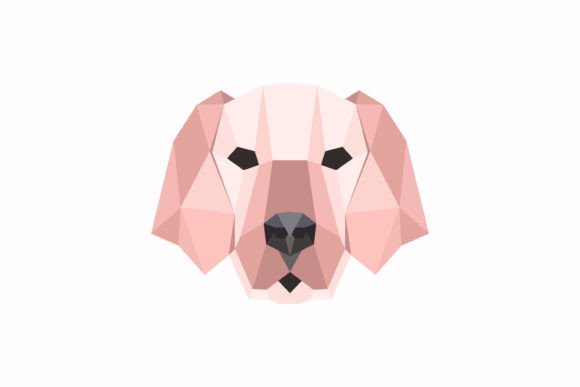
Low Poly Labrador Dog Face
First Impressions: A Modern Take on a Beloved Breed
When I first opened the Low Poly Labrador Dog Face vector, I immediately saw the potential for a fresh, contemporary handmade product. The geometric, low-poly style gives it a crisp, almost architectural feel—symmetrical, balanced, and clean. This isn’t a soft, sketched portrait; it’s a confident, minimalist logo that reads as modern and deliberate. The labrador’s expression remains warm, but the angular polygons keep it from feeling too sentimental. That rare mix of technical precision and emotional appeal is exactly what I look for when planning a machine embroidery design for a client’s custom apparel or a small shop’s brand identity.
Because it’s a vector illustration, my first thought was how it would translate into stitches. The polygon shapes are closed forms, so they lend themselves well to fill stitches or satin stitches if properly digitized. The isolated, symmetrical composition means it will center beautifully on a tote bag, sweatshirt, or patch. And the trendiness of low-poly art means this design will resonate with customers who want something that feels both handmade and modern—perfect for an Etsy seller targeting pet lovers with a taste for contemporary design.
How This Design Performs in Real Embroidery Projects
I decided to test the Low Poly Labrador Dog Face on a custom embroidered tote bag for a friend who runs a dog-walking business. The goal was to see how the geometric shapes held up on medium-weight cotton canvas. I worked with a digital embroidery file I created from the vector, keeping the polygon edges as clean as possible. Here’s what I found.
Where It Excels
- Flat, stable fabrics: The symmetrical design stayed true on tote bags, aprons, and pillow covers. The low-poly facets create a satisfying texture when stitched, especially with a satin stitch outline and fill stitch interiors.
- Custom apparel: On a sweatshirt, the design sat nicely on the chest or back. The modern look got compliments because it didn’t scream “dog shirt”—it looked like a thoughtful logo. Great for boutique goods or small business merchandise.
- Embroidered patches: The isolated nature of the design makes it an ideal candidate for cut-edge patches. The sharp angles contrast well with the soft edge of a patch backing, giving the finished product a premium, dimensional feel.
- Personalized gifts: For a holiday gift like a set of embroidered tea towels, the low-poly labrador felt fresh and unisex. It’s a design that fits both a teenage boy’s hoodie and a grandmother’s kitchen towel, which is rare for a dog face.
Where to Approach with Caution
- Small hoop sizes: The polygon details require a minimum stitch field. If you try to shrink this design below 3 inches, the small triangles become too dense and risk thread breaks or distortion. Always check the hoop size before committing to a baby onesie or a cap front.
- Textured or stretchy fabric: On fleece, knit, or stretchy cotton, the design can pull if not stabilized properly. The fill stitches need a tear-away or cut-away stabilizer to keep the polygon shapes crisp. I tested on a lightweight sweatshirt and had to redo the stabilizer to avoid puckering between the facets.
- Dark fabrics: The Low Poly Labrador Dog Face is typically presented in a single color or with a few contrasting shades. If you stitch it on a dark background, make sure the thread colors are light enough to make the low-poly facets visible. A black or dark navy fabric can swallow the details, especially if the stitch density is too low.
- Curved surfaces like caps: The symmetrical, wide design doesn’t naturally curve with a hat’s crown. You’ll need to adjust the digitizing to split the design or use a curved hoop. For a small run, consider a flat cap panel instead.
Practical Notes from the Digitizing Table
Before you invest time in a finished product, here are a few embroidery designer notes I wish I’d had from the start:
- Test the design on scrap fabric first. The vector may look perfect, but the stitch angles can change the visual weight. I ran a test on a scrap of denim and found that the original polygon division caused a few small triangles to disappear under the satin stitch. I had to merge some tiny facets in the digitizing software to keep the design clean.
- Check thread color contrast. The low-poly style relies on distinct color blocks. If you use only one thread color, the design becomes a flat silhouette. For an embroidered patch, I used three shades of brown and a cream outline—the result was a dimensional, modern dog face that jumped off the fabric.
- Review stitch density. With many small polygons, the fill stitch density can pile up. My first test had a density of 4.0 stitches per mm, which was too dense for the medium-weight cotton. I backed it off to 5.5, and the fabric stayed smooth. Always let the fabric texture guide your settings.
- Confirm your hoop size. This design works best in a 4x4 hoop or larger. If you’re planning to sell finished products, note that the size will affect your pricing. A 5-inch design on a tote bag feels substantial; a 2-inch one on a cap might look cramped.
- Check the licensing. The description says the design is suitable for printing on a t-shirt, but it doesn’t specify commercial use for embroidery. As a digital embroidery file, you need to ensure you have the right to use this vector as a base for digitized designs on finished products you sell. If you’re an Etsy seller or small shop owner, reach out to the graphic designer or choose a license that explicitly covers commercial embroidery. When in doubt, use it for personal projects or gift items.
Visual Appeal and Customer Trust
The Low Poly Labrador Dog Face has a way of making a handmade product look intentionally designed. When I showed the finished tote bag to a group of craft fair shoppers, the reaction was immediate—people touched the stitches and commented on the “modern style.” That’s not something you hear every day about a dog embroidery. The geometric simplicity also makes it easy to pair with a quote or a name, which is a huge plus for personalized gifts. For a small business owner, this design can become a signature logo that looks consistent across different products: t-shirts, aprons, pillow covers, and even digital mockups for your shop.
Because it’s symmetrical and isolated, it works well as a standalone applique design or a fill stitch embroidered patch. The polygonal style doesn’t fade into the background—it commands attention. That’s the kind of visual appeal that builds customer trust: they see a product that looks professional, not generic. And when you’re selling on Etsy or at a craft fair, that trust is everything.
Who Is This Design For?
After working with it, I’d recommend the Low Poly Labrador Dog Face to embroidery designers, crafters, and small business owners who want a modern, geometric dog face that can be used across multiple product categories. It fits especially well in the Crafts and Graphics categories because it bridges the gap between digital art and physical stitching. Whether you’re making a one-of-a-kind baptism gift, a boutique sweatshirt for a local pet store, or a batch of embroidered patches for an Etsy listing, this design gives you a solid, stylish foundation.
Just remember: the key to a successful embroidery project is the digitizing. Take the time to adapt the vector to your machine, test your thread colors, and choose the right fabric and stabilizer. When you do, the Low Poly Labrador Dog Face will stitch out as a confident, contemporary piece that your customers will love—and that’s what keeps the craft business thriving.